
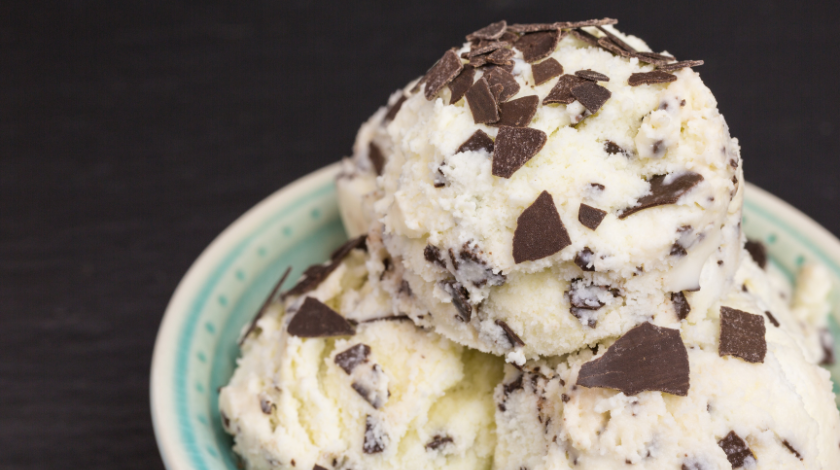
Have you ever scanned a menu or wandered through an Italian market and stopped dead at the word “stracciatella”? Maybe your eyes lit up thinking of that incredibly creamy cheese spilling out of a burrata ball. Or perhaps you pictured a comforting, steamy bowl of soup your grandmother might have made. Or, most likely, you instantly craved a scoop of the world’s most perfect gelato, creamy white and studded with dark chocolate flakes.
Here’s the wonderful, slightly confusing truth: you’re all correct. “Stracciatella” is one of those magical Italian words that doesn’t translate to a single ingredient or dish. Instead, it’s a concept, a technique, a little piece of poetry that applies to three utterly different—yet somehow connected—culinary masterpieces. It’s a cheese, a soup, and a gelato. Let’s unravel this delicious puzzle together, one delightful meaning at a time.
Stracciatella the Cheese: The Creamy, Dreamy Heart
Let’s start with the one that might be the most mysterious: stracciatella cheese. If you’ve ever cut into a ball of fresh burrata and been met with an avalanche of lush, creamy, almost liquid goodness, you’ve met stracciatella. In fact, that is stracciatella.
Think of burrata as a beautiful edible package. The outer shell is a pouch of delicate, fresh mozzarella (pasta filata). The inside, the precious treasure, is stracciatella. Traditionally, it’s made from shreds of that same fresh mozzarella curd (the “rags” or stracci) soaked in fresh, rich cream. The result is a texture that’s impossible to forget—somewhere between a thick, decadent cream and a soft, stringy cheese. The flavor is milky, slightly tangy, sweet, and incredibly fresh.
This cheese hails from the sunny region of Puglia, the heel of Italy’s boot. It was a genius way for cheesemakers to use up the scraps from mozzarella production, turning them into something even more luxurious. Eating stracciatella is an event. You don’t just eat it; you experience it. I remember the first time I had it on a warm Puglian farm. It was served with nothing but a piece of rustic, charred bread. The warmth of the bread gently melted the creamy interior just a touch. The taste was so pure, so profoundly of milk and grass and sunshine, that it ruined all other dairy for me for a good week. That’s the power of real stracciatella cheese.
To enjoy it, keep it simple. Let it come to room temperature. Drape it over ripe tomato slices with a basil leaf and a drizzle of your best olive oil for a Caprese salad that will make you weep. Toss it through hot pasta just off the heat (the residual warmth will create a silky sauce). Or, do as the Pugliesi do: spoon it generously onto crusty bread and eat it immediately, with a contented sigh.
Stracciatella the Soup: Comfort in a Bowl
Now, let’s travel from the pastures of Puglia to the ancient kitchens of Rome for a completely different experience: Stracciatella alla Romana. This is where the name’s true meaning comes to life. “Stracciatella” comes from the Italian verb stracciare, which means “to tear” or “to shred.”
This soup is the epitome of Italian cucina povera—the “poor kitchen” that creates extraordinary food from humble ingredients. It is, at its heart, a gloriously simple egg drop soup. Rich, homemade chicken broth (the soul of the dish) is brought to a gentle simmer. In a bowl, you whisk together fresh eggs, finely grated Parmigiano-Reggiano, a hint of nutmeg, and sometimes a sprinkle of semolina or breadcrumbs for body. Then, you slowly drizzle this mixture into the simmering broth while stirring constantly. The heat cooks the egg instantly, creating delicate, wispy ribbons, little rags, or “stracciatelle,” that float in the golden broth.
The result is a soup that is simultaneously light and nourishing, elegant and comforting. It’s what Roman nonnas make when someone is feeling under the weather. It’s the traditional starter on Christmas Day. It’s proof that you don’t need complexity for depth of flavor. The magic lies in the quality of the broth—it should be deep, clear, and flavorful—and the silky texture of the egg rags.
I learned to make this soup not from a recipe book, but from watching a friend’s Roman mother. She didn’t measure a thing. She just knew. The rhythmic stirring, the gentle pour, the way she tasted the broth once and nodded—it was a lesson in intuition. When you eat it, you understand why it’s survived for centuries. It’s a hug from the inside. It’s clean, straightforward, and deeply satisfying. In a world of overly complicated recipes, stracciatella soup is a beautiful reminder that sometimes, the best things are the simplest.
Stracciatella the Gelato: A Sweet Stroke of Genius
Finally, we arrive at the superstar, the meaning most people know and adore: stracciatella gelato. This is the flavor that has conquered gelaterias worldwide. But its origin story is surprisingly recent and wonderfully specific.
It was invented in 1961 by a man named Enrico Panattoni at his “La Marianna” gelateria in Bergamo, a city in Northern Italy. The legend goes that his young son, tired of plain fiordilatte (sweet milk gelato), kept pestering him for something with chocolate. Inspired, perhaps, by the “shredded” concept of the Roman soup, Panattoni decided to pour a stream of melted, dark chocolate directly onto the churning, creamy white gelato base. The cold gelato instantly solidified the chocolate, shattering it into countless irregular, paper-thin flakes and shards. He called it “stracciatella,” a perfect name for this new “shredded” creation.
This was a revolution. Unlike American chocolate chip ice cream, where the chips are often uniform, sweet, and hard, stracciatella’s flakes are delicate, bitter, and vary in size from tiny specks to satisfying, larger pieces. They create a marbling effect and a perfect textural and flavor contrast. Each bite is different: sometimes you get a burst of bitter chocolate, sometimes just the pure, sweet creaminess of the base. It’s a masterpiece of balance.
This is the true test of a great gelateria for me. A good stracciatella should have a base that tastes like frozen, sweetened milk—clean and not too eggy. The chocolate flakes should be dark and bitter, and they should be distributed throughout, not just sitting on top. When you see a container where the gelato is a beautiful, messy swirl of white and dark brown, you know you’re in for a treat. It’s the flavor I always get on my first day in Italy. It tastes like joy, like invention, like summer.
The Golden Thread: What Truly Connects Them?
So, what connects a creamy cheese, a brothy soup, and a frozen dessert? It’s not the ingredients. It’s the poetry of the process.
The core idea is stracciare—the act of tearing, shredding, or creating something from fragments.
-
In the soup, you shred the egg mixture into the broth to create delicate rags.
-
In the gelato, you shred the melted chocolate onto the cold cream to create delicate flakes.
-
In the cheese, you start with shredded, stringy curds of mozzarella before they are immersed in cream to become the final product.
It’s a celebration of transformation. It’s about taking simple, fundamental components—egg, broth; cream, chocolate; milk, rennet—and through one clever, tactile technique, elevating them into something greater than the sum of their parts. This is the heart of Italian cooking: respect for the ingredient, clarity of technique, and a touch of poetic naming that tells the story of the dish’s creation.
Conclusion
“Stracciatella” is more than just a word on a menu. It’s a delicious lesson in Italian culinary philosophy. It shows us that food is about culture, history, and the clever, beautiful use of what you have. Whether you’re luxuriating in the creamy richness of the cheese from Puglia, finding comfort in the simple, steamy broth from Rome, or experiencing the joyful, frozen perfection of the gelato from Bergamo, you are participating in a story.
The next time you see “stracciatella,” you’ll know the wonderful choice ahead of you. My advice? Don’t choose. Seek out all three. Experience the full, delicious scope of what this single, beautiful word can offer. Your taste buds will thank you for the journey.
Frequently Asked Questions (FAQ)
Q: Is stracciatella cheese the same as burrata?
A: Not quite, but they are intimately connected. Burrata is the complete package: a pouch of fresh mozzarella filled with stracciatella (the creamy mixture of shredded mozzarella curds and cream). So, stracciatella is the delicious filling inside the burrata. You can also buy stracciatella cheese on its own, without the mozzarella shell.
Q: What does “stracciatella” mean in English?
A: The word comes from the Italian verb “stracciare,” meaning “to tear” or “to shred.” It translates roughly to “little shreds” or “little rags.” This perfectly describes the shredded egg in the soup, the shredded chocolate in the gelato, and the shredded curds used to make the cheese.
Q: Is stracciatella gelato just fancy chocolate chip ice cream?
A: While they are similar concepts, there are key differences. Traditional stracciatella gelato uses a fiordilatte (sweet milk) base, which is lighter and less eggy than many ice cream bases. More importantly, the chocolate is melted and drizzled in, creating irregular, bitter, dark chocolate flakes and shards that are much thinner and more delicate than typical sweet, uniform chocolate chips.
Q: Where did stracciatella gelato originate?
A: Stracciatella gelato was invented in 1961 by Enrico Panattoni at his gelateria “La Marianna” in Bergamo, a city in the Lombardy region of Northern Italy. It was created as a way to add chocolate to plain fiordilatte gelato in a new and innovative way.