
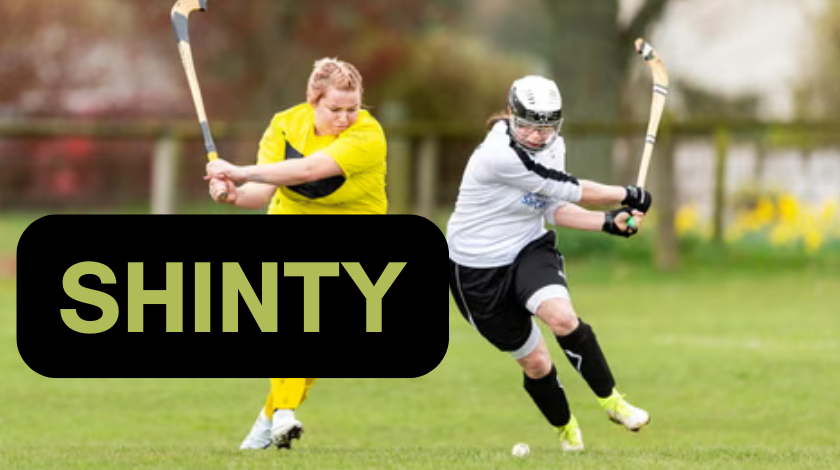
Have you ever driven through the rugged, beautiful glens of the Scottish Highlands and seen a blur of men swinging curved sticks at a small, speeding ball? What you witnessed wasn’t a historical reenactment. It was shinty. Pronounced “shin-tee,” it’s one of the world’s oldest and fastest team sports played on grass, and it holds the soul of Gaelic Scotland within its simple, chaotic framework.
I remember my first live shinty match. It wasn’t in a pristine stadium, but on a bumpy field next to a loch, the air thick with midges and the sound of Gaelic shouts. The speed was staggering. The ball, or sliotar, rocketed through the air like a comet, and players met it with a crack of ash that echoed off the hills. It was beautiful, brutal, and utterly captivating. It felt less like a modern sport and more like a natural force. If you’re curious about this incredible piece of living history, let me walk you through it.
A Game Forged in the Mist of Time
To understand shinty, you have to step back centuries. Its Gaelic name is camanachd, coming from the word caman for the curved stick. Historians believe its roots stretch back over 2,000 years, possibly to ancient Irish stick-and-ball games played by warriors. There’s even a theory that it was a training exercise for sword and shield combat, which makes perfect sense when you see the full-blooded swings and athletic blocks.
For generations, it was the game of the Highland clans. Whole villages would play against each other across miles of open countryside, with hundreds of players and few rules. It was more of a moving battle than a organised match. When the clan system was crushed after the 1745 Jacobite Rising, shinty, like the Gaelic language itself, was suppressed but never extinguished. It survived in the hearts of Highland communities. The modern, organised version was born in 1893 with the formation of the Camanachd Association, the sport’s governing body, which finally standardised the rules and saved shinty from fading away. This isn’t just a sport; it’s a resilient thread in the fabric of Scottish culture.
The Tools of the Trade: Caman and Sliotar
The equipment is beautifully simple, yet full of nuance. The caman (pronounced ka-man) is your shinty stick. It’s not like a hockey stick. Traditionally made from a single piece of ash, it has a curved, flattened end called the boss. The curve and the angle of the boss are unique to each player, often shaped to their own liking. Picking up a well-worn caman, you feel its balance and the history in the wood—the dents, the tape, the personality. Modern ones are often laminated for strength, but the soul of the game is in that piece of crafted timber.
The ball is called a sliotar (shlit-er). It’s similar to a baseball but with a cork core and tighter stitching. It’s hard and can travel at terrifying speeds. In the hands of a skilled player, it can be lifted, driven, and controlled with pinpoint accuracy. Wearing one of these on the shin is, I’m told, an unforgettable experience—hence the sport’s name, many say. Protective gear is minimal: mainly shin guards and, for goalkeepers, a helmet similar to a hurling keeper’s. This lack of padding adds to the raw, courageous feel of the game.
The Rules in a Nutshell: Controlled Chaos
At first glance, shinty looks like glorious anarchy. But beneath the surface, there’s a clear, elegant structure. The aim is simple: use your caman to hit the sliotar into your opponent’s goal, which is a football-style net. A goal is worth one point. Games are 90 minutes long, with two halves.
Here’s where it gets interesting. A shinty pitch is huge—often over 140 yards long. There are 12 players on each side, including a goalkeeper. You can play the ball in the air or on the ground, which leads to spectacular high-fielding and lightning-fast ground strikes. But the most unique rule is about the “spare hand.“
Unlike hockey, you can’t hold the stick with two hands to swing. You must have one hand on the stick at all times. Your other hand—the “spare” one—is used for blocking, catching the ball out of the air (you’re allowed one step with it), or guiding the stick in a tackle. This rule creates a stunning display of ambidexterity and ball control. Watching a player pluck a speeding ball from the sky with their free hand, take a single step, and then smash it 60 yards downfield is a true thing of beauty.
Physical contact is a big part of the game. You can shoulder charge an opponent who has the ball, or is going for the ball, in a way that would be a foul in many other sports. This adds a layer of sheer physicality and bravery. Fouls mainly involve dangerous swinging, hitting an opponent’s stick above the head, or “hacking” their caman.
Shinty vs. Hurling: The Celtic Cousins
This is the question everyone asks. Yes, shinty and Irish hurling are ancient cousins, stemming from the same Gaelic root. Having watched both, I can tell you they are brotherly but distinct sports.
Think of hurling as the more refined, technical cousin. The ball (sliotar, same name) is smaller and can be balanced on the flat hurley (stick) for incredible solo runs. The pitch is smaller, and the game is slightly faster, with more intricate, short-passing ground play. Shinty, by contrast, feels more rugged and powerful. The emphasis is on long, raking passes and fierce, direct contests. The caman’s boss is designed for driving the ball huge distances. While a hurler might dance through a defence, a shinty player might bypass it entirely with a monstrous hit from deep.
There’s a lovely tradition called the Shinty-Hurling Internationals, where compromise rules are used, and Scotland’s shinty players take on Ireland’s hurlers. It’s a fantastic celebration of their shared heritage and fierce rivalry.
The Heartbeat of the Highlands: Community and the Camanachd Cup
This is where shinty’s true magic lies. It’s not a spectator sport for the masses; it’s a community sport. Clubs are the lifeblood of villages and towns from Oban to Inverness, Skye to Newtonmore. Playing for your local club is a point of immense pride, often following family traditions that go back generations. The atmosphere at a local derby is electric, fueled by a friendly but deep-seated rivalry.
The pinnacle of the shinty year is the Camanachd Cup final, held every September. This is the Scottish Cup of shinty. The whole shinty world descends on a neutral ground. The passion is immense. I’ve been to a final, and the noise when a goal is scored—a mix of roars, pipe bands, and drumming—is unforgettable. It’s more than a trophy; it’s the holy grail, dreamed of by every young player with a caman in their hands.
So, How Can You Get Started?
You might be reading this, thinking, “This sounds amazing, but I’ve never held a stick!” That’s perfectly fine. Shinty clubs are almost always incredibly welcoming to new players of any age or ability. They know their sport is a hidden gem and are passionate about sharing it.
Your first step is to look up the Camanachd Association website to find a club near you. Just send them a message or turn up to a training night. They’ll have spare sticks. Don’t worry about being perfect. Focus on getting a feel for swinging the caman, making contact with a stationary ball, and, most importantly, having fun. The fitness will come—shinty is one of the best full-body workouts you’ll ever get. Be prepared for some sore muscles and a few laughs.
You can also support the sport by going to watch a match. Check the fixtures, wrap up warm (it’s Scotland, after all), and find a spot on the sidelines. Watch the trajectory of the long passes, the skill of the “spare hand,” and the sheer commitment in every tackle. You’ll be hooked.
Conclusion
Shinty is more than just a game. It’s a living, breathing piece of Scottish history. It’s the crack of ash on leather echoing in a glen, the mud-spattered determination on a player’s face, and the warm, communal spirit in the clubhouse after the match. In a world of overly commercialised sports, shinty remains defiantly pure, authentic, and community-driven. It represents the resilience, strength, and spirit of the Highlands itself. Whether you ever pick up a caman or not, witnessing this ancient, thrilling sport is an experience that stays with you. It’s a raw, beautiful reminder of where our games began—not in boardrooms, but on the land, played for the love of the contest and the pride of the people.
Frequently Asked Questions (FAQ)
Q: Is shinty dangerous?
A: It is a physical, full-contact sport, so there is an inherent risk, like in rugby or football. However, the rules are designed to protect players from dangerous play. Serious injuries are less common than you might think, thanks to the skill and control of the players. Protective gear like shin guards is essential.
Q: Can women play shinty?
A: Absolutely! Women’s shinty is a growing and fantastic part of the sport. There are dedicated women’s leagues and teams, and the skill level and competitiveness are incredibly high. The rules are the same.
Q: Where is shinty most popular?
A: Its heartland is in the Scottish Highlands and Islands—places like Fort William, Kingussie, Newtonmore, Skye, and Oban. However, there are also clubs in major cities like Glasgow, Edinburgh, and even in England and North America, often started by exiled Highlanders.
Q: What’s the biggest shinty match of the year?
A: The Camanachd Cup Final is the showpiece event, usually held in September. The location rotates around different venues in Scotland.
Q: How is shinty different from field hockey?
A: They are very different. In hockey, you cannot use the rounded side of the stick, play the ball in the air, or have body contact. Shinty allows all of these. The shinty stick (caman) is also completely different in shape and use from a hockey stick.