
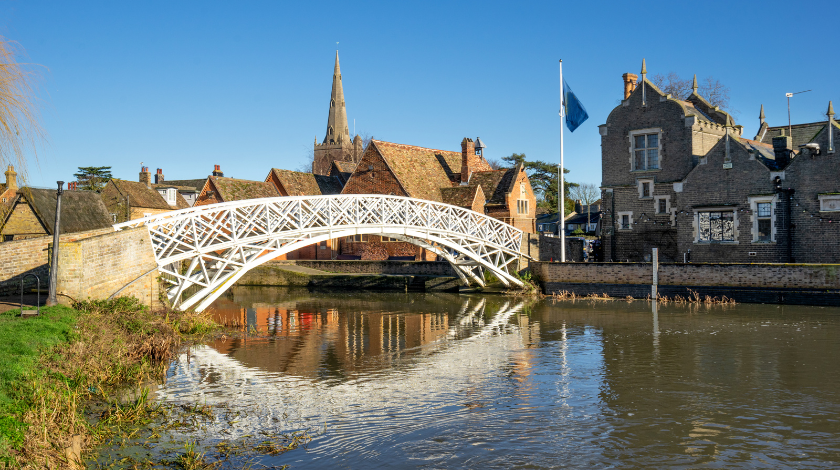
Have you ever driven past a place a dozen times, seen its name on a sign, and never thought to turn off the main road? For years, that was me with Godmanchester. I’d zip along the A14 in Cambridgeshire, glance at the exit, and carry on to more famous destinations. What a mistake that was. One sunny, lazy Saturday, I decided to correct it. I took the turn, drove over the old bridge, and found myself in what felt like a secret chapter of English history, wrapped in the gentle calm of riverside life. Let me tell you, Godmanchester is a place that deserves your full attention, not just a glance from a bypass.
Where in the World is Godmanchester?
Let’s get our bearings first. Godmanchester is nestled in Cambridgeshire, right in the heart of eastern England. If you’re looking for a major reference point, it sits directly across the River Great Ouse from the much larger market town of Huntingdon. In fact, they’re so close they almost feel like twins, but with distinctly different personalities. While Huntingdon is a bustling hub of shops and buses, Godmanchester has held onto a quieter, more village-like atmosphere, despite its size. It’s brilliantly connected – just off the A14, linking Cambridge to the Midlands – yet it feels wonderfully separate. The river acts as both a physical and symbolic boundary, slowing the pace down as soon as you cross the bridge.
A Stroll Through Layers of History
You can’t understand Godmanchester without touching its past. It’s not just old; it’s authentically, deeply historical in a way you can feel underfoot.
It all started with the Romans. Long before it had its grand name, this was a vital crossing point on the River Great Ouse. The Romans, being the superb engineers they were, built a fort here called Durovigutum. It became an important staging post on Ermine Street, the major road from London to York. I remember standing on the grassy mounds near the church, where the Roman earthworks are still subtly visible if you know what to look for. It’s a powerful feeling, imagining legionaries marching where now there are people walking their dogs. The town’s museum in Huntingdon has some fascinating local finds that really bring this era to life.
Then comes the medieval period, which gifted Godmanchester its most famous feature: The Causeway. This isn’t just any old street. It’s a wide, green boulevard flanked by breathtaking thatched and timber-framed houses, many dating back to the 15th and 16th centuries. Walking down it feels like stepping into a living postcard. The houses are set back behind deep ditches, which were originally part of the town’s defence and drainage system. Each home has its own little bridge, creating a storybook scene. I spent a good hour just ambling along, peeking at the intricate woodwork and imagining the generations of families who have lived there. It’s a masterpiece of preserved English architecture.
What to See and Do in Godmanchester Today
So, beyond soaking in the history, what does a visitor actually do here? Plenty, I assure you, especially if you enjoy gentle exploration.
Your first stop should be the riverside. The River Great Ouse is the town’s lifeblood. A paved path runs along it, perfect for a peaceful stroll, a bike ride, or a bench-side picnic. You’ll get gorgeous views back towards Huntingdon’s spire and see plenty of swans, ducks, and narrowboats chugging peacefully by. Following the path, you’ll come to China Mill, a charming 19th-century tower mill that’s been converted into houses. It’s a picturesque spot that photographers love.
For green space, the Godmanchester Nature Reserve is a true local treasure. Once medieval fishponds, these connected lakes and wetlands are now a haven for birdlife. The circular walk around them is flat, easy, and incredibly serene. I’ve spotted herons, kingfishers, and all sorts of waterfowl there. It’s the kind of place that clears your head.
You cannot visit without popping into at least one of its historic pubs. The Black Bull on The Causeway is a quintessential 16th-century coaching inn, with low beams, open fires, and a fantastic atmosphere. I had a lovely lunch there, and it was easy to imagine travellers stopping for rest centuries ago. The Jubilee Fountain right outside is another lovely landmark. For food, there are also excellent modern restaurants and cosy cafes tucked away, offering everything from a full English breakfast to intimate dinners.
The Great Debate: Is Godmanchester a Town or a Village?
This is a question that even locals enjoy debating. Officially, it’s a town with a royal charter dating back to 1212. It has a mayor and a town council. By definition and history, it’s a town. But in feel, it possesses the soul of a large village. There’s a strong sense of community, a lack of harsh urban noise, and a focus around a beautiful parish church (St Mary’s, which is well worth a visit for its peaceful churchyard and ancient origins) rather than a sprawling high street. I think this duality is its greatest charm. It has the amenities and historical significance of a town, but the warmth and pace of a village. You get the best of both worlds.
Living In or Visiting: A Few Personal Tips
If you’re considering visiting for a day, my advice is to park easily (there’s a good car park near the community centre) and just wander. Start on The Causeway, loop down to the river, walk along to the nature reserve, and come back via the main street to see the independent shops. Allow half a day to really appreciate it.
For those thinking about living here, it’s a highly sought-after location, and property prices reflect that. You’re paying for the exceptional environment, the excellent schools, and the fantastic commute links to Cambridge, Peterborough, and even London via the nearby train station at Huntingdon. The sense of safety and community is palpable. I spoke to a local walking his dog who told me he moved here 20 years ago and never found a reason to leave. That seems to be a common theme.
My Lasting Impression
What stayed with me after my visit wasn’t just one single landmark, but a feeling. Godmanchester feels cared for. From the immaculately kept thatched cottages to the clean, accessible riverside paths, there’s a pride of place here. It’s a community that knows it’s sitting on something special – a slice of Roman road, a ribbon of medieval history, and a beautiful riverside setting – and it preserves it without turning it into a museum. It’s lived-in history.
It taught me a valuable lesson about exploration: sometimes the most rewarding destinations aren’t the ones you drive for hours to reach, but the ones you’ve been passing by all along. Next time you’re on the A14 near Huntingdon, take that exit. Cross the bridge, find a parking spot, and give yourself over to a slow walk through time. I promise you won’t regret it.
Conclusion
Godmanchester is far more than just a neighbour to Huntingdon. It is a distinct and captivating destination in its own right, boasting a profound history that stretches from Roman engineers to medieval wool merchants. Its unique character, perched between the official status of a town and the warm feel of a village, is defined by stunning landmarks like The Causeway, the tranquil River Great Ouse, and vibrant green spaces like its nature reserve. Whether you are a history enthusiast, a lover of picturesque walks, someone seeking a hearty meal in a historic pub, or a potential resident looking for a connected yet serene community, Godmanchester offers a rich and rewarding experience. It is a testament to the idea that some of England’s greatest treasures are found not in bustling cities, but in peaceful, history-steeped corners where the past and present gracefully coexist.
Frequently Asked Questions (FAQ)
Q: How do you pronounce Godmanchester?
A: It’s pronounced exactly as it looks, but said quite quickly: “God-man-chester.” The emphasis is on the first syllable: “GOD-man-chester.”
Q: Is Godmanchester a good place to live?
A: It is widely considered an excellent place to live. It offers a high quality of life with its beautiful environment, strong sense of community, good schools, and convenient transport links to major employment centres like Cambridge, Peterborough, and London. The property market is competitive due to high demand.
Q: What is the main attraction in Godmanchester?
A: The most famous and visually stunning attraction is The Causeway, a unique medieval street lined with exceptional thatched and timber-framed houses. The riverside walks along the Great Ouse and the Godmanchester Nature Reserve are also major draws for visitors and locals alike.
Q: Can you walk from Huntingdon to Godmanchester?
A: Absolutely, and it’s a lovely walk. You can cross the historic bridge over the River Great Ouse on foot in just a few minutes. There are well-maintained footpaths on both sides, making it easy to explore both towns in a single trip without needing a car.
Q: Did the Romans really live in Godmanchester?
A: Yes, they did. Godmanchester was the site of a significant Roman settlement and fort called Durovigutum. It was an important stop on Ermine Street. Evidence of this past can still be seen in the landscape and is documented in the local museum in Huntingdon.
Q: Are there places to eat and drink in Godmanchester?
A: Definitely. It has a great selection of traditional pubs (like the iconic Black Bull), contemporary restaurants, cafes, and tearooms. You can find everything from a casual coffee and cake to a full restaurant meal in a historic setting.